JWST Clusters May Reveal Birthplaces of Early Black Hole Seeds
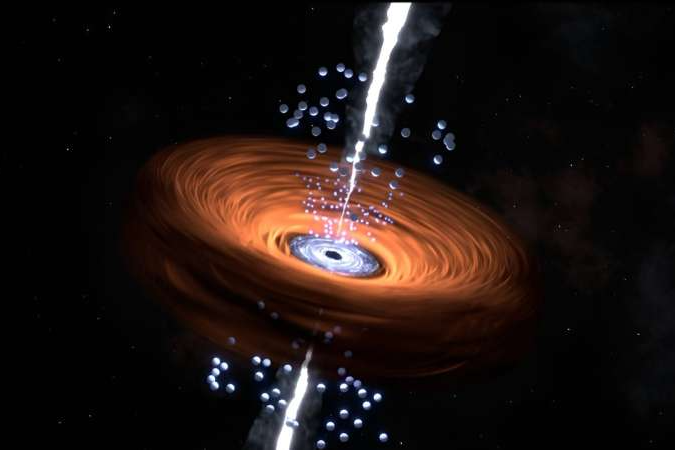
How did giant black holes appear so early in the universe? A study in Astronomy and Astrophysics, led by Viola Bocchi of Sapienza University of Rome, argues that dense young star clusters seen by the James Webb Space Telescope are natural places for intermediate-mass black holes to form. The work offers a new idea.
Webb found massive clusters in two gravitationally lensed early galaxies. The Cosmic Gems arc, seen about 460 million years after the Big Bang, contains five, while the Firefly Sparkle, about 600 million years after, contains ten. Models suggest the Cosmic Gems clusters could form seeds of roughly 1,600 to 2,700 solar masses.
The Firefly Sparkle clusters could produce seeds of about 180 to 810 solar masses. No intermediate-mass black hole was directly observed, so the result shows a plausible formation environment rather than a detection. Even so, it offers a concrete clue to how supermassive black holes could have grown quickly in the infant universe.
This is a short summary. Read the original report at universetoday.com